


Beyond Gratitude: Making Room for the Full Range of Emotions in the Classroom
As November brings a greater focus on gratitude and Thanksgiving, educators can create more inclusive classrooms by making space for the full range of students’ emotions and experiences. A trauma-informed approach recognizes that gratitude can foster connection and well-being, but should never be used to minimize pain, force positivity, or replace meaningful attention to inequity and systems that need to change. By prioritizing choice, belonging, emotional safety, and more complete stories, educators can create classrooms where students feel seen, supported, and connected.

When Everyone Is Running on Empty: A Trauma-Informed Reset for the Middle of the School Year
By late October, educators and students may be feeling depleted as the demands of the school year accumulate, making it an important time to pause and assess what the community needs. A trauma-informed approach recognizes that behavior and capacity are shaped by stress, relationships, environment, and unmet needs, and responds by prioritizing connection, predictability, inclusion, and support. An October reset is not about starting over, but about creating more sustainable conditions for the months ahead.

Teaching Difficult History Without Recreating Harm: A Trauma-Informed Approach to the Classroom
Teaching difficult history requires more than presenting students with stories of violence, oppression, and collective trauma. This article explores how trauma-informed educators can teach challenging histories with honesty and care by centering context, cultural humility, lived experiences, agency, and the humanity of the people whose stories are being taught. Rather than asking students to emotionally reenact historical trauma, educators can create learning environments where students engage with painful truths while developing greater understanding, critical thinking, connection, and a sense of possibility.

What Trauma-Informed Educators Need to Know About Student Behavior in Weeks 3–6 of School
The third and fourth weeks of school often bring a noticeable shift in student behavior. This article helps educators interpret those changes through a trauma-informed lens and respond with co-regulation, curiosity, clear boundaries, and repair.

The Spring Spiral: Why Student Behavior Escalates This Time of Year and What Trauma-Informed Teachers Can Do About It
If something in your classroom has shifted this spring, you are not imagining it. Every year, as the final weeks of school approach, student behavior escalates in ways that can feel sudden, personal, and exhausting. It is not random, and it is not your fault. It has a name, a neuroscience, and a trauma-informed response.

Helping Children Feel Safe to Feel: How Educators Can Support Emotional Expression in Trauma-Affected Students
When children grow up in environments where emotions are dismissed or punished, they learn to hide the most human parts of themselves. Here, we explore how educators can recognize when students come from emotionally unsafe homes and how trauma-informed classroom practices can help them feel seen, heard, and safe to express their feelings. With consistent relationships, reflection, and restorative care, schools can become the spaces where children learn that it’s safe to feel again.

Designing for Connection: A Trauma-Informed Approach to Classroom Setup
This guide helps you reimagine your classroom setup as a trauma-informed, healing-centered space that fosters connection, emotional regulation, and belonging for all students. With practical strategies rooted in Resilient Futures' 4 R’s (Relate, Reflect, Renew, and Restore), you’ll learn how to design zones, calming corners, visual supports, and collaborative layouts that honor neurodiversity and student voice. Whether you’re starting fresh or making small changes, your classroom can become a sanctuary.

Developing Trauma-Informed Teachers
An Educational Book Series from Resilient Futures
[July 2022] Co-edited by Resilient Futures founder Megan Brennan, this volume of the series Contemporary Perspectives on Developing Trauma-Informed Teachers provides reflections, examples, and implementation guidance for the innovative and important ways educators develop and implement trauma-informed practices across their programs, instituting broader curricular shifts to incorporate trauma-informed practices.
[January 2023] Co-edited by Resilient Futures founder Megan Brennan, this volume of the series was driven by a deep desire to ensure that teacher candidates are thoughtfully prepared to more fully address students’ needs and create classroom environments that are safe for students and teachers.

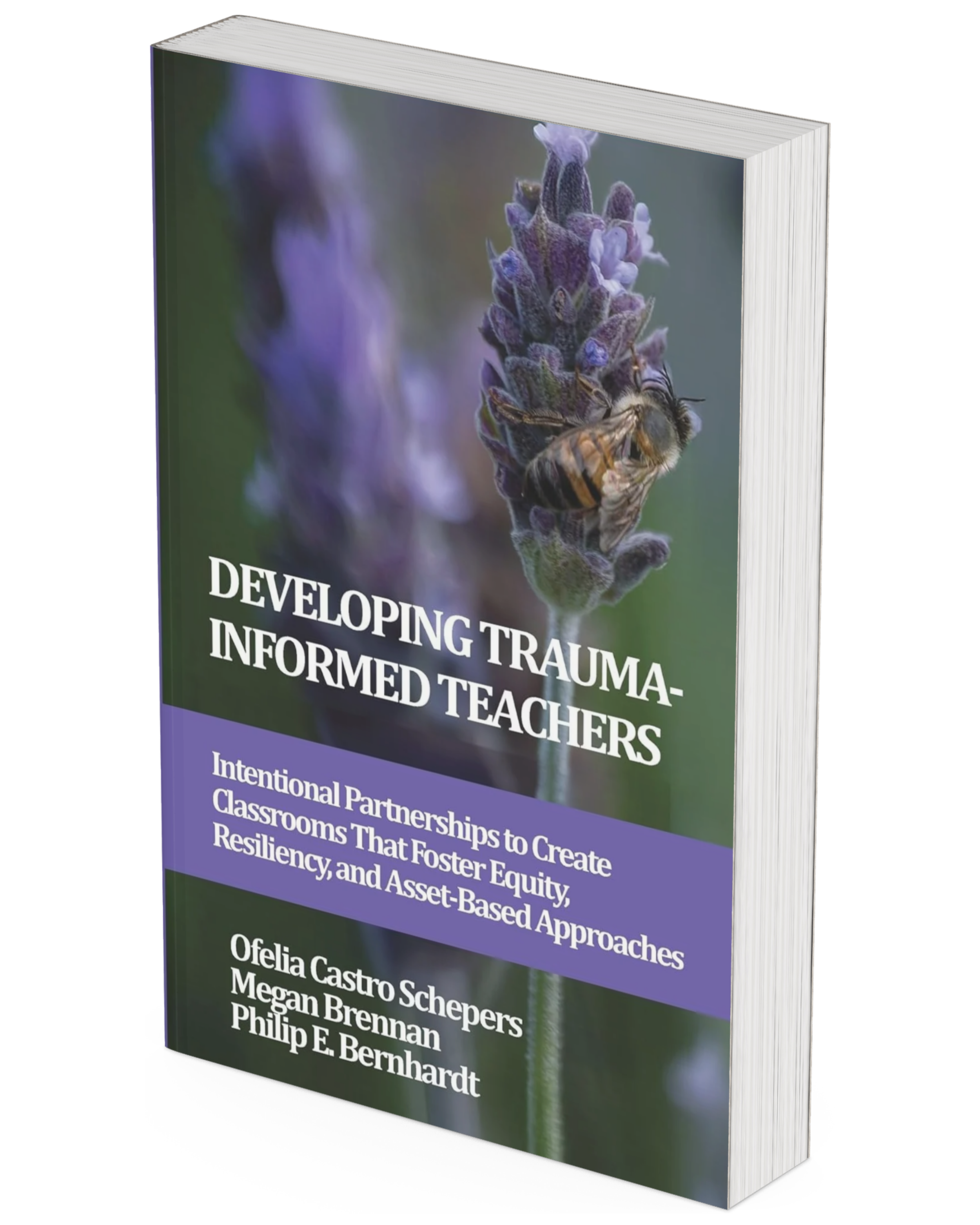
Developing Trauma-Informed Teachers: Intentional Partnerships to Create Classrooms That Foster Equity, Resiliency, and Asset-Based Approaches
[May 2025] Co-edited by Resilient Futures founder Megan Brennan, this volume of the series we delves into the heart of educational evolution: Intentional Partnerships to Create Classrooms that Foster Equity, Resiliency, and Asset-Based Approaches.
Childhood Trauma:
An event(s) that a child finds overwhelmingly distressing or emotionally painful, often resulting in lasting mental and physical effects.
Many think of trauma as a single life-changing event, but more commonly trauma manifests as a series of events or patterns of abusive or neglectful behaviors that compound over time.
Understanding Childhood Trauma

In the Press

Give to further our Mission
More than ever, our schools and youth-serving communities are in need of trauma-informed education, training, and resources. Your tax-deductible gift will directly fund our program expansion efforts, enabling us to provide trauma-informed training and resources to a greater number of educators, schools, and youth-serving organizations.
Interested in learning more about our Trauma-Informed Futures© Programming & Services?